
Demurrage and Detention & Free Time in Shipping: Complete Guide for Exporters and Importers

Introduction:
If you’re learning how to start an export business in India in 2025, one of the key aspects you’ll need to understand is the hidden costs associated with shipping—particularly demurrage and detention & free time. These charges can silently drain your profit if not managed wisely.
In this detailed guide, we’ll cover everything you need to know about demurrage and detention & free time in Shipping, including definitions, key differences, cost implications, calculation methods, examples, FAQs, and tips to reduce or avoid these charges.
What is Demurrage in Shipping?
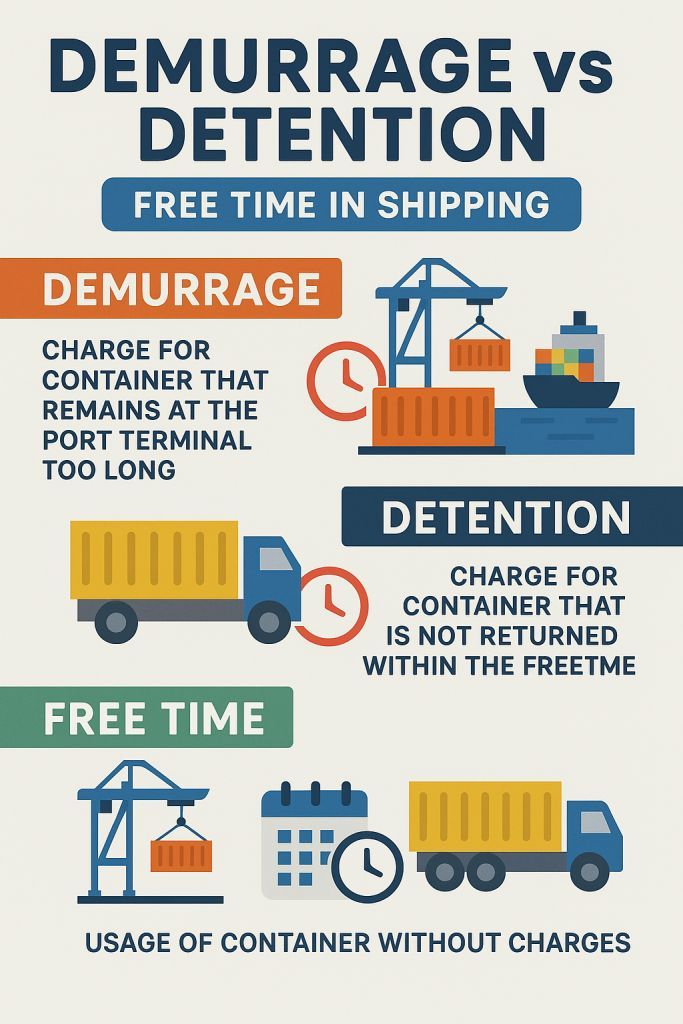
Demurrage refers to the charge imposed by a shipping line when a container remains at the port terminal beyond the allotted free time, before it is picked up by the consignee.
When Does Demurrage Occur?
- After the container is offloaded from the vessel
- While the container is still within the port terminal
- Beyond the allowed free time for importers
Example:
If an importer gets 5 days of free time and fails to clear the container from the port within those 5 days, demurrage charges will apply from day 6 onward until the container is cleared.
What is Detention in Shipping?
Detention refers to the charges levied when a container is taken outside the port/terminal but not returned to the shipping line’s depot within the allowed free time.
When Does Detention Occur?
- After the container is picked up from the port (import)
- Before the empty container is returned
- When exporters hold containers too long before stuffing and gate-in
Example:
You have 7 days of free time to return an empty container. If you return it on the 9th day, you’ll pay 2 days of detention charges.
What is Free Time?
Free Time is the grace period offered by the shipping line or port authority during which the container can be held without incurring demurrage or detention charges.
Types of Free Time:
- Port Free Time: Provided by port/terminal
- Line Free Time: Offered by shipping line for container use
- Combined Free Time: May include both demurrage and detention buffer
Key Differences: Demurrage and Detention
| Feature | Demurrage | Detention |
|---|---|---|
| Area Applied | Inside port terminal | Outside port terminal |
| Applies To | Full container not cleared from port | Empty container not returned to depot |
| Trigger Point | Delay in port clearance | Delay in returning empty container |
| Responsible Party | Importer or Exporter | Importer or Exporter |
| Who Charges | Shipping line | Shipping line |
Port Storage vs Demurrage Charges
Port storage and demurrage are not the same:
| Port Storage | Demurrage |
|---|---|
| Charged by Port Authority | Charged by Shipping Line |
| For occupying port space | For occupying shipping line’s container |
| Bill is separate from ocean freight bill | Appears on the shipping line invoice |
Who Pays Demurrage and Detention Charges?
These charges are typically paid by:
- Importers in import shipments
- Exporters in export shipments (if container held too long)
- Freight forwarders if terms are DDP or DDU and delays are on their part
⚠️ Note: Even if the delay is due to customs or documentation, the consignee is often liable unless otherwise negotiated.
This makes it essential for new exporters—especially those referring to the Essential Export Documents Required in 2025 – Complete Guide for Exporters—to understand contractual terms and who holds responsibility under various Incoterms Explained: The Ultimate Guide for Global Trade.
How are Demurrage and Detention Charges Calculated?
Charges are usually based on:
- Number of days delayed
- Rate per day (varies by carrier and port)
- Progressive rates: Charges increase with more delay
Sample Rate Table:
| Day Range | Charge per Day |
|---|---|
| Day 1–3 | $50 |
| Day 4–7 | $75 |
| Day 8+ | $100 |
Each shipping line and port has its own tariff. Always check before booking.
Free Time Policies by Carriers
| Carrier | Import Free Time | Export Free Time |
|---|---|---|
| Maersk | 5–7 days | 7 days |
| MSC | 3–5 days | 5–7 days |
| CMA CGM | 5–7 days | 5 days |
| Hapag Lloyd | 4–6 days | 6–7 days |
⚠️ These are general figures. Actual policies vary by country, port, and contract.
Real-Life Examples
🔹 Importer Case:
An Indian importer failed to clear 2 containers from Mundra Port within 5 days of arrival. He faced:
- Demurrage: ₹12,000 per container for 3 extra days
- Detention: ₹10,000 per container for late return of empties
- Total loss: ₹44,000
🔹 Exporter Case:
An exporter in Chennai delayed loading by 4 days after container gate-out.
- Detention charged by line: ₹3,000/day × 4 = ₹12,000
How to Avoid or Reduce Demurrage and Detention
Tips for Importers:
- Pre-clear documents before vessel arrival
- Use Customs Brokers for faster clearance
- Track vessel ETAs and plan in advance
- Negotiate more Free Time in contract
- Avoid delays in duty payment or license
Tips for Exporters:
Start by planning ahead. If you’re a beginner and just figuring out how to start an export business in India in 2025, make sure you understand your free time allowance and choose carriers that offer flexibility.
- Book only when cargo is ready
- Avoid holding containers after pickup
- Know the cutoff dates for container gate-in
Delays due to incorrect paperwork are one of the leading causes of detention. Familiarize yourself with the Essential Export Documents Required in 2025 – Complete Guide for Exporters to avoid costly errors.
11. Key Terms and Definitions
| Term | Definition |
|---|---|
| CY | Container Yard |
| ETA | Estimated Time of Arrival |
| Gate-In | Entry of loaded container into port terminal |
| Gate-Out | Pickup of empty or full container from port |
| FCL | Full Container Load |
| LCL | Less than Container Load |
| Shipper | Exporter or party sending goods |
| Consignee | Importer or party receiving goods |
| Carrier | Shipping line or freight company |
FAQs on Demurrage and Detention and Free Time
I’m new to exports—how do I prevent detention charges?
Start with strong fundamentals. Read resources like Customs Clearance Process for Export Business: A Complete Guide (2025) so you can avoid unnecessary delays caused by documentation errors or inspection bottlenecks.
Can demurrage be waived?
Yes, in certain cases (port congestion, strikes), lines may waive or reduce charges.
Is free time same for all shipments?
No. It depends on carrier, port, contract, and location.
Who negotiates free time?
Shippers or freight forwarders can negotiate this with carriers before booking.
Do incoterms affect demurrage liability?
Yes. For example, under FOB, the buyer handles clearance and may pay demurrage. Under DDP, seller is responsible.
Conclusion
Demurrage and Detention & free time in Shipping are more than just logistical terms—they directly impact profitability and operational efficiency. Understanding these charges, negotiating better terms, and proactive planning can help you minimize extra costs and improve your supply chain.
Whether you’re just researching how to start an export business in India in 2025, or already managing regular international shipments, understanding the Customs Clearance Process for Export Business: A Complete Guide (2025) and mastering Incoterms Explained: The Ultimate Guide for Global Trade will help you minimize or eliminate avoidable costs such as demurrage and detention.
Watch this Video for more Clarity : Demurrage vs Detention Explained | Free Time in Shipping



Related posts:
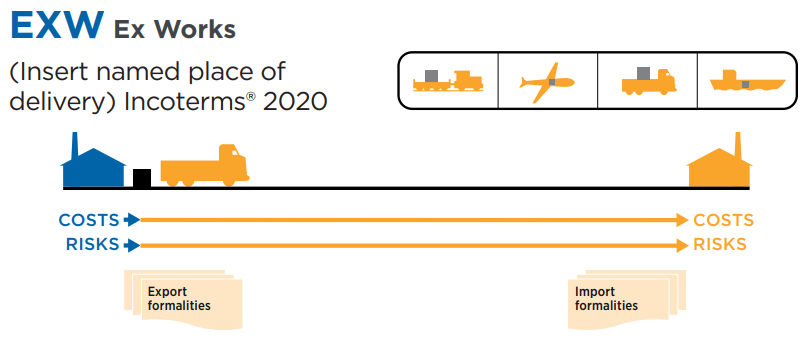
 EX Works (EXW) Incoterms Explained: Exporter’s Complete Guide
 How to Start an Export Business in India in 2025 – Beginner’s Guide
 Essential Export Documents Required in 2025 – Complete Guide for Exporters
 Incoterms Explained: The Ultimate Guide for Global Trade
 Customs Clearance Process for Export Business: A Complete Guide (2025)
 Top 25 High margin export products from India
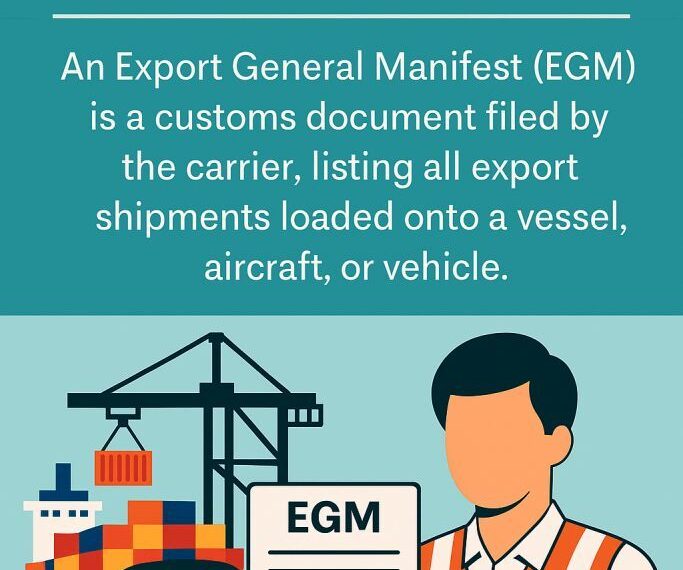
Pingback: EGM in Export: Ultimate Guide to Compliance for 2025
Hi there, I found your web site via Google whilst
searching for a comparable subject, your website came up,
it seems good. I’ve bookmarked it in my google bookmarks.
Hi there, simply was alert to your weblog via Google, and found that it’s really informative.
I am gonna be careful for brussels. I’ll appreciate if you happen to continue this in future.
Numerous people can be benefited out of your writing. Cheers!